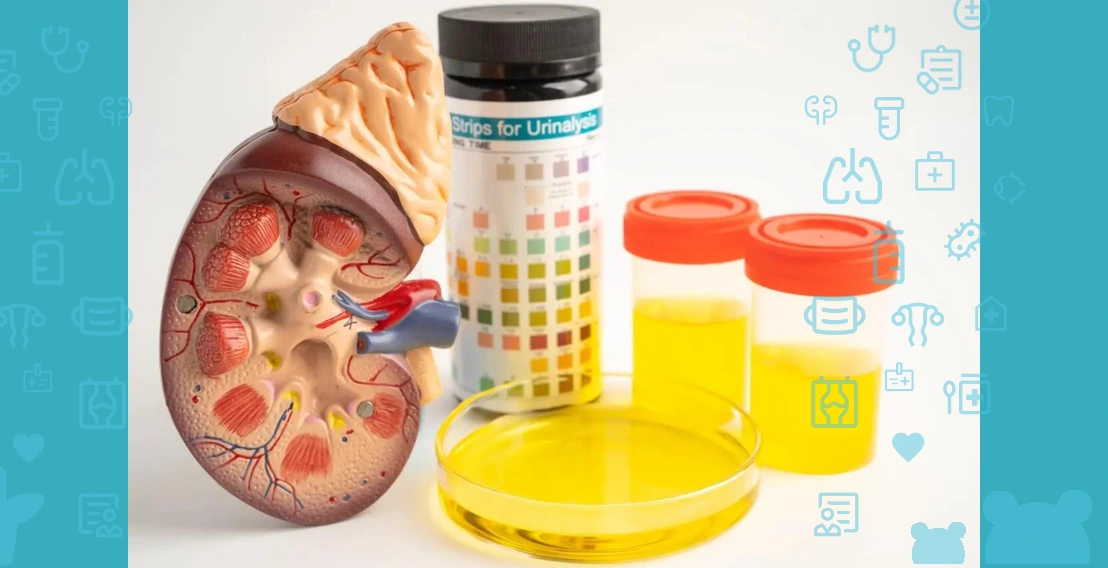
A general urine test is one of the most common tests in modern medicine. It is prescribed during preventive examinations, when various pathologies are suspected, during pregnancy, before planned operations, and when it is necessary to monitor the course of chronic diseases and the effectiveness of treatment.
.What is a complete urinalysis? It is a comprehensive laboratory test, which provides the doctor with information about the functioning of the urinary system, as well as the characteristics of metabolism and the general condition of the body.
Due to its non-invasiveness, rapid results, and high informativeness, this study is called the "gold standard" of primary diagnostics.
The essence of the study and its diagnostic role
During the analysis, specialists examine the main characteristics of urine: organoleptic (color, odor, transparency), physicochemical (density, acidity, presence of protein and glucose) and microscopic (presence of epithelial cells, erythrocytes, leukocytes, casts and salts).
In clinical practice, this study is basic, as it allows you to simultaneously assess several body systems and identify various hidden disorders. In this case, the analysis acts as a “signal system” – the doctor cannot make a diagnosis based on the results, but the information received tells him where to look for the cause of the pathology. Deviations in the indicators may indicate inflammation, infection, impaired kidney filtration function, metabolic problems, as well as systemic diseases that do not manifest themselves externally.
Another important function of urine analysis is monitoring. Regular tests allow you to track the dynamics of your general condition, assess the effectiveness of treatment, and notice deterioration in time.
In what cases does the doctor prescribe an examination?
Indications for urine analysis are:- Preventive examinations and medical check-ups. Regular examinations make it possible to monitor the general state of health and detect minimal deviations in the functioning of organs before the first symptoms appear.
- Pregnancy. Timely monitoring helps prevent the development of gestosis and other complications.
- Symptoms from the urinary system. A referral for analysis is made for lower back pain, frequent and painful urination, changes in urine color or odor, and the appearance of edema.
- Chronic disease management. Regular laboratory monitoring is necessary for patients with diabetes, hypertension, chronic kidney disease, and those taking medications for a long time.
- Treatment monitoring. For already diagnosed kidney or bladder diseases, the results of the analysis allow you to monitor the effectiveness of the therapy.
What abnormalities can the study detect?
What can a general urine test show? A wide range of pathological conditions, including:- Inflammatory processes and infections. An increase in the number of leukocytes, a change in the reaction of urine, and the appearance of bacteria indicate cystitis, urethritis, or pyelonephritis.
- Kidney disease. The appearance of protein (proteinuria), red blood cells, and casts signals a violation of the filtration capacity of the kidneys.
- Metabolic disorders. The presence of glucose may be a sign of diabetes, an increased concentration of salts indicates a predisposition to urolithiasis. Ketone bodies in the urine appear in diabetic ketoacidosis and prolonged fasting.
- Liver and gallbladder pathologies. The presence of problems is indicated by changes in the level of bilirubin and urobilinogen.
It is important to note that any abnormalities in the test results cannot serve as a diagnosis. They are only a signal for further examination.
Preparing for the analysis
To obtain reliable information, it is important to follow the following rules:- Nutrition. The day before the test, eliminate foods that color urine (beets, carrots, rhubarb) from your diet. Avoid spicy, salty foods and alcohol (which change the chemical composition of urine), as well as coffee and carbonated drinks (which affect the acidity level).
- Medications. Stop taking diuretics, anti-inflammatory drugs, antibiotics, and vitamins (especially B and C). They affect the color and chemistry of your urine. If you cannot stop taking medications, be sure to tell your doctor about them.
- Physical activity. Avoid excessive exercise, heavy physical labor, and sauna use the day before. Otherwise, protein and red blood cells may appear in the urine. Special attention should be paid to children so that they do not engage in sports or active games before collecting the material.
Women are not recommended to take the test during menstruation. Even a minimal amount of blood in the urine will distort the overall picture.
Regular general urine analysis helps to notice changes in the child's body in time and prevent the development of serious problems. I recommend that parents do not postpone the examination and register their children for tests in a timely manner.

Rules for collecting material for research
Describe step-by-step how to properly collect urine: hygiene, first morning portion, middle portion, sterile container, delivery time to the laboratory. Use the key "how to take a general urine test" organically.
How to take a general urinalysis to avoid common mistakes and false readings?
Before collecting the material, thoroughly wash the external genitalia with clean water (without antiseptics and scented soap).
You should first obtain a sterile disposable container from the laboratory or buy it from a pharmacy. Do not use food cans. Even if they are thoroughly washed, detergent or chemical residues can distort the results.
For analysis, the first morning urine is collected - it is the most concentrated and reflects the stable night state of the body. The first portion (the first 1–2 seconds) is flushed down the toilet: it washes out the urethra and may contain foreign cellular elements. The middle portion is collected in a sterile container. A sufficient sample volume is 50–100 ml.
After collection, the container should be tightly closed and delivered to the laboratory within 1–2 hours. With prolonged storage or heating of the sample, cellular elements are destroyed, bacteria multiply, and the result becomes unreliable. Storage in a refrigerator at a temperature of 2-8°C is permissible, but not more than 3–4 hours.
Features of collection in children and infants
In infants and young children, urine collection is carried out using special disposable urine collectors that are attached to the perineum with a hypoallergenic adhesive layer. Before use, the child must be thoroughly washed and the skin must be dried - this will ensure a secure fit and prevent leakage. The most common mistake made by parents is to squeeze urine out of the diaper: this leads to contamination of the sample and makes the analysis unsuitable for interpretation. In older children, the collection technique is similar to that of adults, but requires explanation and control.
Key indicators and their meanings
A complete urinalysis is usually performed within one business day. In most laboratories, the result is available within 2–4 hours after the sample is received. In some cases, with a high workload or the need for additional confirmation, the period may be up to 24 hours.
The result includes three groups of indicators. Physical characteristics - color, transparency, relative density (specific gravity) - give an idea of the concentrating ability of the kidneys and possible impurities in the sample. Chemical indicators - reaction (pH), protein, glucose, ketones, bilirubin, urobilin, nitrites - reflect metabolic processes and possible pathological changes. Microscopy of the sediment allows you to detect cellular elements: leukocytes, erythrocytes, epithelium, as well as cylinders, salt crystals and bacteria. Together, these three blocks give a comprehensive picture of the state of the urinary system.
What can affect the reliability of the results?
Errors in collecting and storing the material are the most common cause of false results. Using a non-sterile container, collecting urine not on an empty stomach or not in the morning, prolonged storage at room temperature - all this changes the pattern of the sediment and the chemical composition of the sample. Contamination with external secretions (especially in women during menstruation) leads to a false increase in the number of erythrocytes and leukocytes.
Physiological factors are no less important. Intense physical activity the day before can cause transient proteinuria or microhematuria, not associated with the disease. Taking some medications - antibiotics, B vitamins, iron preparations - changes the color of urine and can distort chemical indicators. Abundant fluid intake before collection leads to artificial dilution of the sample and underestimation of concentration indicators.
All these factors can lead to a situation where the doctor receives a result that does not correspond to the patient's real condition - and is forced to prescribe a repeat examination or additional tests. Therefore, compliance with the rules of preparation and collection is not a formality, but a necessary condition for high-quality diagnostics.
When to consult a doctor after receiving the results
Having received the results of the analysis, patients often try to interpret them independently. However, independent interpretation of deviations from the reference values is a risky approach that can lead to both excessive anxiety and underestimation of real problems. Some deviations are a variant of the norm in specific conditions (for example, microproteinuria after physical exertion), while others require urgent attention from a doctor.
Consultation with a specialist is mandatory if the result reveals significant proteinuria, red blood cells, pus, or bacteria in large quantities. It is equally important to evaluate the result in the context of the clinical picture: the same indicator may have different meanings depending on the symptoms, concomitant diseases, and other laboratory data.
A complete urine test is always considered in conjunction with other tests - a complete blood count , biochemical parameters, and kidney ultrasound data. Only a comprehensive assessment allows the doctor to make a well-founded conclusion and prescribe adequate treatment. Therefore, even “minor” deviations should be discussed with a specialist, and not relied solely on one’s own interpretation of numerical values.