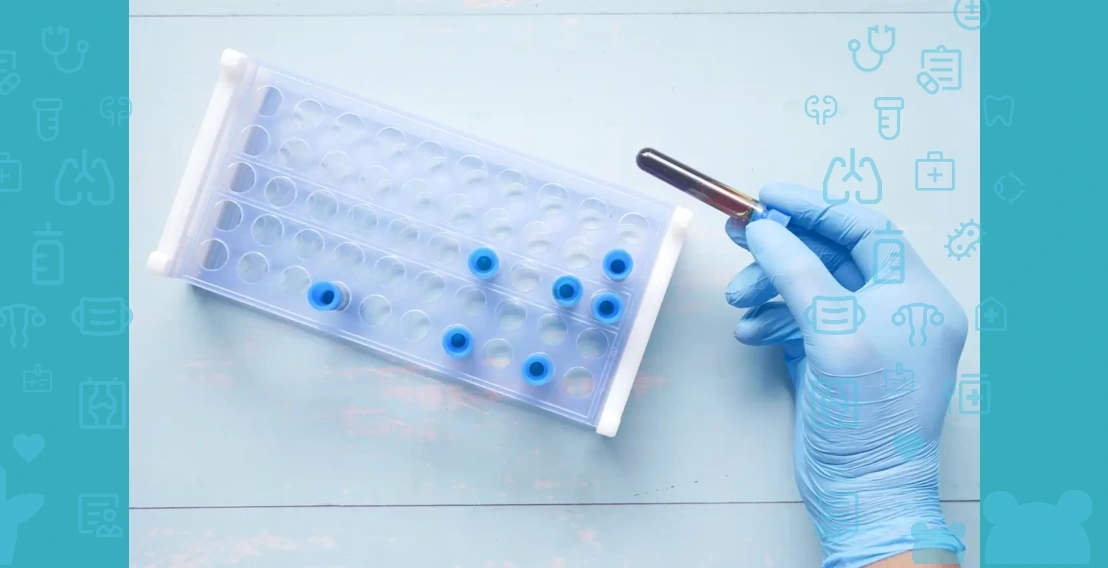
Hormones are biologically active substances that are produced by the endocrine glands and regulate the work of the entire body. They affect growth and development, metabolism, sleep, emotional state, and reproductive function. Therefore, even minor hormonal imbalances can affect a wide variety of aspects of well-being - from body weight to mood.
But you shouldn't take hormone tests "just in case." This is not a universal screening, but a specific diagnostic tool: the doctor selects a specific list of tests individually, depending on the patient's age and gender, existing symptoms, and clinical picture.
What are hormones and why does the body need them?
Hormones are produced by endocrine glands, then enter the bloodstream and travel through the bloodstream to target organs, where they perform a specific function.
Thyroid hormones are responsible for metabolic rate and energy levels, and affect the heart, digestive system, and nervous system. The adrenal glands produce hormones that help you adapt to stress, regulate blood pressure, and metabolism. Sex hormones are responsible for puberty and reproductive health.
Hormonal balance is especially important for children and adolescents, as during the period of active growth and puberty, any disturbances can negatively affect physical and psycho-emotional development. Therefore, pediatricians carefully decide which hormone tests to take.
When a doctor may order hormone tests
Usually, a doctor recommends taking hormone tests when:- unexplained changes in body weight;
- constant fatigue;
- chronic sleep disorders;
- skin problems;
- hair loss.
Children are referred for hormonal testing if they have delayed physical or mental development, very rapid growth, too early (before 8–9 years) or late (after 13–14 years) puberty. Women should have their hormone levels checked if they have menstrual irregularities, problems conceiving, or sudden mood swings.
Important! The presence of one symptom is not evidence of a hormonal disorder. Fatigue, weight changes, sleep problems can be the result of many other reasons. Therefore, before checking hormones, you should consult a doctor. He will consider the overall clinical picture and make a final decision based on a set of symptoms.
What hormones are most often tested?
Laboratory diagnostics examine several key groups of hormones, each of which is responsible for the functioning of a separate body system:- thyroid hormones;
- sex hormones;
- adrenal hormones;
- hormones related to metabolism.
There is no need to take all possible indicators at once - the doctor chooses only the hormone analysis that will help assess the functioning of a specific body system and make the correct diagnosis.
Thyroid hormones
The main hormones produced by the thyroid gland are thyroid-stimulating hormone (TSH), free T3 and T4. Their levels are checked if hyper- or hypofunction of the organ is suspected, in case of unexplained changes in body weight, heart rhythm disorders, menstrual cycle disorders, reproductive health problems, and severe weakness. These tests are often included in the basic examination for a wide range of complaints, because the thyroid gland affects the overall metabolism. In this case, the doctor selects a list of indicators individually - it is not always necessary to take the entire spectrum of thyroid hormones at once, quite often for the initial screening it is enough to assess the TSH level.
Sex hormones
This group includes:- follicle-stimulating hormone (FSH) – stimulates the maturation of follicles in the ovaries and spermatogenesis in the testicles;
- luteinizing hormone (LH) – triggers ovulation and activates the production of testosterone and progesterone;
- estradiol – is responsible for the development of secondary sexual characteristics in girls, regulates the menstrual cycle and the condition of the endometrium;
- testosterone – in boys, it ensures the development of male sexual characteristics and spermatogenesis; in girls, it is present in small quantities and participates in libido and overall hormonal balance;
- Progesterone – prepares the endometrium for a possible pregnancy and supports it in the early stages.
In children and adolescents, the interpretation of the results has its own characteristics, because the norms depend on the age and stage of sexual development. Before the onset of puberty, the levels of LH, FSH, estradiol and testosterone are physiologically low. During puberty, the indicators gradually increase, and the nature of the changes differs in boys and girls. In addition, the result must be evaluated in the context of the clinical picture (presence of secondary sexual characteristics, height), and not only by the number on the form.
In women of reproductive age, LH, FSH, estradiol, and progesterone change throughout the menstrual cycle:
- FSH and LH are usually determined on days 2–5 of the cycle (follicular phase) to assess ovarian reserve; LH has a sharp peak before ovulation;
- estradiol - low at the beginning of the cycle, gradually increases to a pre-ovulatory peak;
- Progesterone is informative on the 20th–23rd day of the cycle, when the fact of ovulation is confirmed.
The same hormone level may be normal on one day of the cycle and abnormal on another. Therefore, without specifying the day of the cycle, it is impossible to correctly interpret the analysis result.
Adrenal hormones
Cortisol and other adrenal hormones control the body's response to stress, regulate metabolism, and support a number of physiological processes. Since cortisol levels vary throughout the day (highest in the morning), the time of day when the test is taken is crucial for obtaining an accurate result.
Hormones related to metabolism
Insulin plays a key role in regulating blood glucose levels. Its analysis helps to assess the sensitivity of tissues to glucose when insulin resistance is suspected. But for a complete assessment of carbohydrate metabolism, the doctor may prescribe not only hormonal, but also other laboratory indicators, for example, glycated hemoglobin or fasting glucose level. Such studies are usually prescribed in the presence of specific symptoms or risk factors, and not as a routine check.
In children, hormonal parameters change along with the growth and development of the body, so the same result can have different meanings depending on age, gender and stage of puberty. That is why you should not choose hormonal tests yourself or compare the child's results with adult reference values - it is important to first assess the complaints, physical development and the overall clinical picture.

Hormonal tests in children: what is important for parents to know
Pediatric endocrinology has its own specifics. A doctor may order an examination if a child is growing significantly slower or faster than their peers, has sharp weight fluctuations, delayed or premature signs of puberty, or suspected thyroid dysfunction.
Important! Reference values for children differ significantly from those for adults and vary depending on age, gender, and stage of sexual development. Therefore, the results should be evaluated by a pediatric endocrinologist. Independent comparison of indicators with the norm for adults can lead to erroneous conclusions.
Hormonal tests in adults
In adulthood, the examination is most often performed in cases of thyroid dysfunction, sudden weight change, chronic fatigue, severe and prolonged weakness, as well as reproductive problems. In this case, the doctor does not prescribe all possible tests "just in case", but selects a list of tests based on specific complaints.
How to prepare for hormone tests
The accuracy of the results of hormonal tests largely depends on proper preparation:
- Nutrition. Blood is donated on an empty stomach. 24 hours before the analysis, fatty foods and alcohol should be excluded from the diet.
- Time of day. Most hormones (especially cortisol, TSH, prolactin) are taken in the morning, as hormone levels change throughout the day.
- Physical activity and stress. You should avoid intense exercise for 24 hours and rest for 15–20 minutes before blood collection.
- Cycle day. When determining the level of female sex hormones, it is important to adhere to the cycle days indicated by the doctor.
- Medications. You should inform your doctor in advance about taking any medications (especially hormonal and contraceptives).
Since the requirements vary depending on the specific analysis, it is worth clarifying the preparation rules with your doctor before taking it.
Can I donate hormones myself without a doctor's prescription?
It is quite possible to take tests at your own discretion, but the availability of the opportunity does not mean that a person needs a specific test. Deviation of the indicator from the reference value does not always indicate a disease - it can be a temporary physiological reaction to stress, lack of sleep or the phase of the cycle. Without taking into account symptoms, age, gender and other accompanying indicators, the result can be difficult to interpret correctly, and sometimes it will have no diagnostic value at all - for example, if the analysis is taken on an inappropriate day of the cycle or without taking into account the time of day.
This is especially important to consider when examining children and adolescents: without clinical context and age norms, independent interpretation of the result can be misleading and lead to unnecessary anxiety or, conversely, to ignoring the real problem.
How to correctly understand the results of hormonal tests
One of the common mistakes is to evaluate the result only according to the principle of “above normal” or “below normal” without taking into account the context. The values of hormonal indicators are influenced by age, gender, time of day and day of the cycle in which the blood was donated, physiological state (for example, pregnancy), taking certain medications, as well as concomitant diseases. In addition, it is important to focus on the reference values of the laboratory that performed the analysis, since they may differ depending on the research methodology. And most importantly, the diagnosis is never made on the basis of one isolated analysis, the doctor assesses the patient’s general condition and other clinical data.
Where to take hormonal tests in Kharkiv
If you or your child have indications for examination, you can take the necessary hormonal tests in Kharkiv at the medical center "Mother's House". Comfortable conditions have been created here for patients of any age: you can consult a pediatrician, therapist or specialist, and if necessary, immediately take the prescribed laboratory tests, without wasting time searching for a separate laboratory, which is especially convenient for parents with children. In addition, after receiving the results, you can always contact the doctor again for their interpretation and further recommendations.
When to see a doctor
If you or your child are experiencing persistent changes in well-being, noticeable problems with growth and development, puberty disorders, or other worrying symptoms, it is worth consulting a specialist. The doctor will determine whether the symptoms are indeed related to hormonal changes and will prescribe only those tests that are necessary in a particular case.
Hormones are essential for the proper functioning of the body – from metabolism to reproductive health and child development. However, there is no universal set of tests that should be taken regularly “for prevention”. The right approach is a doctor’s consultation, individual selection of the necessary tests, careful preparation for their delivery and professional interpretation of the results, taking into account the patient’s age, gender and clinical picture.