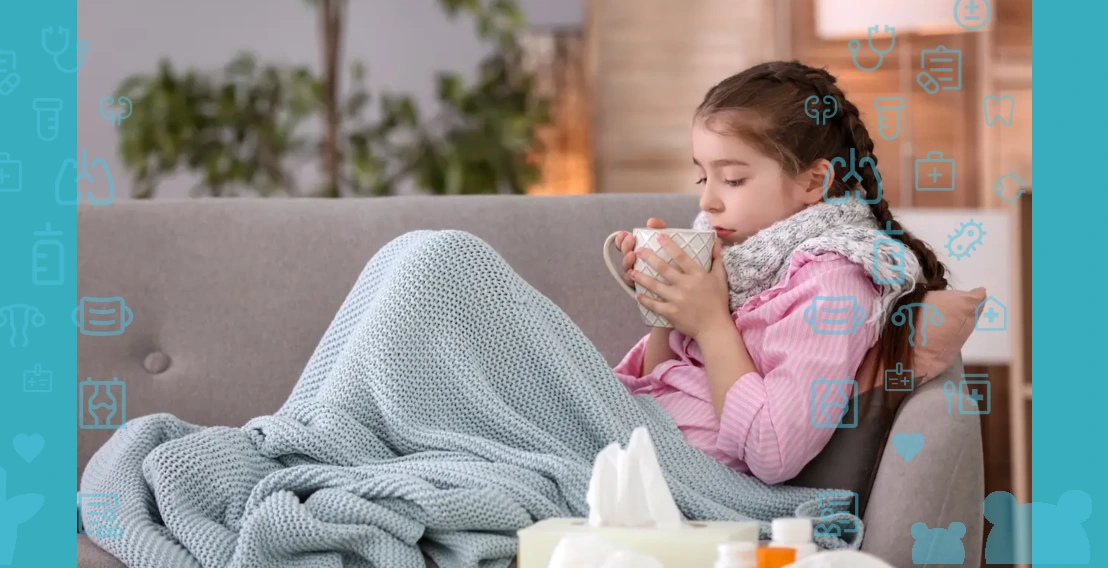
Colds are quite common in children and can cause concern among parents. In fact, 6–8 (and sometimes more) episodes of acute respiratory viral infections per year are considered within the physiological norm for children who attend kindergarten or school. However, the line between natural immune system development and hidden health problems can be very thin. This article will help you understand what processes take place in a child’s body, when it is worth seeing a doctor, and which tests should be taken when a child frequently has colds to identify the underlying cause of a runny nose.
Why Does a Child Get Sick Frequently: Main Causes
The most common cause of frequent colds is the physiological immaturity of the immune system, which is still «learning» to recognize pathogens and develop protective antibodies.
However, when looking for an answer to the question of why a child gets sick frequently, it is important to understand that frequent colds are not simply a matter of a «weak immune system», but rather a combination of several factors, including:
- Adaptation to a children's group. At kindergarten and school, a child is simultaneously exposed to a large number of virus and bacterial strains that are new to them.
- Iron and vitamin D deficiency. Even a hidden deficiency of these nutrients, which directly affect the functioning of the immune system, can significantly reduce the body's ability to resist infections.
- Chronic sources of infection. Enlarged adenoids, dental caries and chronic tonsillitis can serve as a constant source of bacterial burden.
- Allergic reactions. Swelling of the mucous membranes caused by allergic rhinitis can make a child more vulnerable to viruses. In addition, allergic reactions can often be mistaken for colds or make their course more complicated;
- Psycho-emotional factors. Stress during adaptation to kindergarten, fatigue, lack of sleep and anxiety can weaken the body's protective defenses.
What Is Considered «Frequent» Colds in Children of Different Ages
Before talking about frequent colds in a child, it is important to consider the child's age and social activity. Toddlers aged 1–3 years who have just started attending a children's group may get sick up to 10–12 times a year. Such a frequency can be considered a normal variant during the adaptation period. Preschool children aged 4–5 years tend to get sick somewhat less often (7–9 times a year), while by school age the frequency of colds usually decreases to 4–6 episodes per year.
It is important to distinguish the adaptation period (when a child has mild illnesses without complications, recovers quickly and returns to normal activity) from actual immune deficiency, when illnesses occur one after another with little recovery time, are severe and are accompanied by serious complications requiring frequent courses of antibiotic therapy or hospitalization.
Warning Signs: When Tests Are Really Necessary
There is no need to see a doctor and have tests performed every time a child catches a cold. However, it is worth consulting a pediatrician and undergoing diagnostic testing if a child frequently gets sick and the following factors are present:
- every acute respiratory viral infection ends with complications (otitis, sinusitis, bronchitis, pneumonia);
- the child needs 3 or more courses of antibiotic therapy per year;
- a low-grade fever (37.1–37.5 °C) persists for a long time without an obvious reason;
- lymph nodes remain enlarged and painful even outside periods of illness;
- the child appears lethargic and pale, gets tired quickly and gains weight poorly;
- recovery after each cold takes a long time, while the intervals between illnesses become shorter.
Frequent colds do not always indicate problems with the immune system. In children who attend kindergarten or school, recurrent episodes of acute respiratory viral infections are often associated with exposure to a large number of viruses during the adaptation period. At the same time, it is important to pay attention to the severity of illnesses, the frequency of complications and the duration of recovery. If a child gets sick frequently or infections are severe, a pediatrician may prescribe the necessary examinations to determine possible causes and choose the appropriate further management.

Which Tests Should a Child Have If They Get Sick Frequently?
Examination of a child who frequently gets sick usually begins with basic tests that help identify the most common causes of frequent colds:
- complete blood count (CBC);
- ferritin and iron level test;
- vitamin D test;
- immunogram;
- throat and nasal swab for microbiological testing;
- tests for helminth infections and giardiasis.
A comprehensive examination can help distinguish viral processes from bacterial ones and identify hidden deficiencies and parasites.
Complete Blood Count (CBC)
This is a basic examination that provides a significant amount of information. A CBC shows the levels of leukocytes, lymphocytes, neutrophils, hemoglobin and ESR (erythrocyte sedimentation rate). It helps the pediatrician distinguish a viral infection from a bacterial one, identify anemia in time and detect signs of an inflammatory process.
Ferritin and Iron Level Test
Even if the hemoglobin level in a CBC remains within the normal range, a child may have latent (hidden) iron deficiency, which can negatively affect immune system function and the child's resistance to infections. A ferritin test can help determine the body's iron stores.
Vitamin D Test
Vitamin D is a powerful immunomodulator that plays an active role in regulating the immune response and stimulating the production of the body's own antimicrobial proteins in mucous membranes. Therefore, vitamin D deficiency is considered one of the common hidden factors associated with frequent colds, especially during the autumn and winter period, when natural vitamin D synthesis through the skin is significantly reduced. Vitamin D deficiency is most often diagnosed in children who spend little time in the sun or live in regions with few sunny days.
Immunogram: When Is It Prescribed?
An immunogram is not the first or «preventive» test that should be performed «just in case». It is a specialized extended assessment of immune system parameters (immunoglobulins IgA, IgG, IgM, IgE and lymphocyte subpopulations), which is prescribed by a pediatric immunologist after a basic examination when there are specific indications (severe or recurrent bacterial infections, suspected primary immunodeficiency, lack of response to standard treatment) suggesting a possible deficiency in a particular component of the immune system.
Throat and Nasal Swab for Microbiological Testing
Bacterial culture can help identify chronic bacterial carriage (for example, Staphylococcus aureus, streptococci or Haemophilus influenzae) and assess the sensitivity of microorganisms to antibiotics. Bacteria that are constantly present in the nasopharynx can weaken local defenses and maintain an inflammatory process, potentially contributing to recurrent ENT diseases even without obvious symptoms of carriage. A swab may be particularly relevant if a child frequently has tonsillitis, sinusitis or otitis.
Tests for Helminth Infections and Giardia
Parasites can produce substances that affect the body, cause allergic reactions and interfere with the absorption of nutrients and vitamins, which can weaken the immune system and contribute to frequent illnesses. Therefore, testing for helminth infections and giardiasis may be included in a comprehensive examination of a child who frequently gets sick.
Which Doctors Should You Consult?
First of all, you should consult a pediatrician. The doctor will assess the child's general condition, review their medical history and, if necessary, prescribe basic tests.
Based on the results of the initial examination, the pediatrician may refer the child to specialists:
- ENT specialist — if colds are frequently accompanied by otitis, sinusitis or enlarged adenoids;
- allergist — if there is a suspicion that frequent «colds» are actually allergic rhinitis;
- immunologist — if the basic examination does not identify the cause of illness, if infections are severe, atypical or recurrent, or if an immune deficiency is suspected.
How to Get Tests at «Mamin Dim»
At «Mamin Dim» children's clinics, you can quickly undergo all the necessary examinations without stress and in a child-friendly environment:
- Complete blood count (CBC)
- Ferritin and serum iron test
- Vitamin D (25-OH) level test
- Nasal and throat swab for microbiological testing with an antibiogram
- Comprehensive immunogram
Our treatment rooms are specially equipped for young patients, and our experienced staff know how to make blood sampling as comfortable as possible for a child.
You can book an appointment for laboratory testing or a doctor's consultation directly through the website or by phone.
Frequent colds in a child are not a reason to panic, but they are also not something that should be ignored. In most cases, the cause lies in natural age-related characteristics of the immune system or the period of adaptation to a children's group. At the same time, tests can help identify a specific cause when one is present — iron or vitamin D deficiency, hidden bacterial carriage or a parasitic infection. The main thing to remember is that tests are not an end in themselves, but a tool: the doctor forms the overall picture by assessing the examination results together with the child's general condition and medical history.