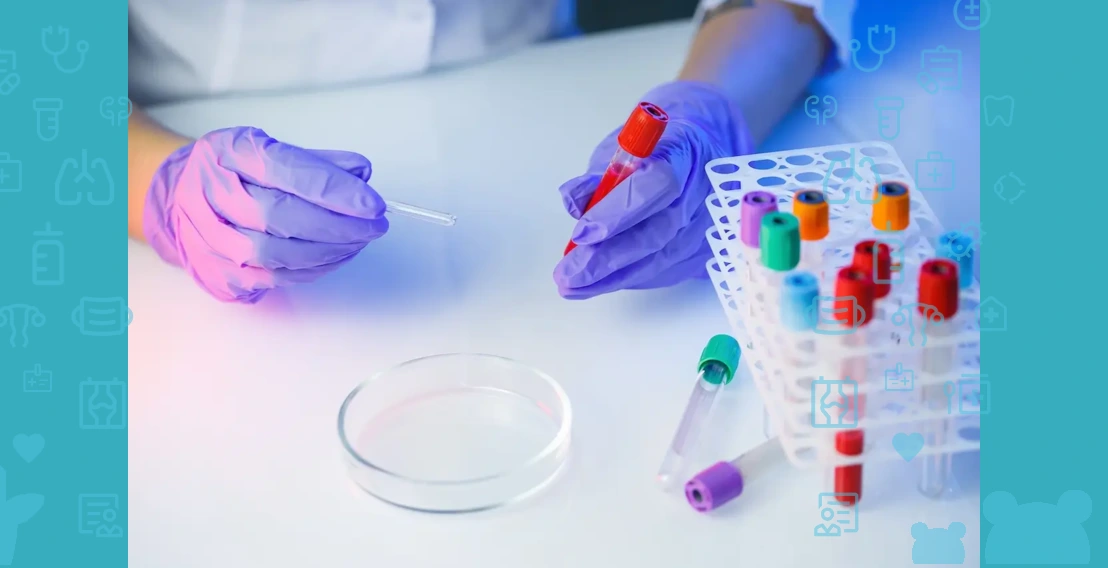
Infection is a condition caused by the penetration of infectious agents (viruses, bacteria, fungi, parasites) into the body. Latent forms are of particular danger, which occur without pronounced symptoms, but cause damage to organs and systems, leading to chronic diseases and infertility.
A key tool in modern medicine is laboratory tests , which help to accurately identify pathogens even before clinical symptoms appear. Diagnostics covers a wide range of pathogens: viral, bacterial, parasitic and fungal infections.
What are infections?
Depending on the type of pathogen, infections are divided into 4 groups: viral, bacterial, fungal (mycoses), and parasitic.
| Type of infection | Pathogens | Diseases |
|---|---|---|
| Viral | Viruses (non-cellular agents) | Influenza, measles, COVID-19, HIV, hepatitis B and C, chickenpox, herpes, mononucleosis, rubella, papillomavirus infection, tick-borne encephalitis |
| Bacterial | Bacteria (single-celled microorganisms) | Angina, tuberculosis, pneumonia, syphilis, gonorrhea, chlamydia, mycoplasmosis |
| Mushroom | Pathogenic fungi (unicellular and multicellular microorganisms) | Candidiasis (thrush), ringworm, dermatomycoses, aspergillosis |
| Parasitic | Protozoa (amoeba, giardia) or multicellular parasites (helminths) | Trichomoniasis, giardiasis, ascariasis, opisthorchiasis, echinococcosis, enterobiasis, trichinosis, toxoplasmosis |
Each group of infections has its own characteristics, transmission routes, and treatment approaches. Viral infections are mainly transmitted by airborne droplets or through biological fluids, bacterial infections can be spread by contact and sexual contact, fungal infections most often occur against a background of reduced immunity, and parasites enter the body with food and water.
What tests are used for diagnosis?
The choice of diagnostic method depends on the suspected pathogen, the stage of the disease, and its localization.
| Diagnostic method | What does it reveal? | When applied |
|---|---|---|
| PCR (polymerase chain reaction) | Genetic material (DNA/RNA) of viruses and bacteria | The most accurate method for early diagnosis of infections. Allows you to detect pathogens of various diseases: HIV, herpes, hepatitis B and C, sexually transmitted infections, candidiasis, papillomavirus, mononucleosis, tuberculosis, tick-borne encephalitis, TORCH infections. |
| Serology (IgM/IgG antibody tests) | The body's immune response - the presence of antibodies to the pathogen | Used for the diagnosis of hepatitis, TORCH infections, measles, syphilis, toxoplasmosis, HIV, rubella, as well as to determine the stage of infection (recent infection, acute phase, past illness, immunity) |
| Bacteriological cultures (cultural study) | Live bacteria and their sensitivity to antibiotics | It is prescribed for suspected bacterial infections of the genitourinary and respiratory systems. The biomaterial is placed on nutrient media. The method helps not only to identify the pathogen, but also to choose the most effective antibiotic. |
| Microscopy | Pathogen (bacteria, fungi, protozoa, some viruses) | Express diagnostic method. Biomaterial (swabs, discharge) is studied under a microscope. It allows diagnosing candidiasis, trichomoniasis, gonorrhea. |
| Stool tests for parasites | Eggs, larvae or fragments of helminths, protozoa | If intestinal parasitic infections are suspected. |
What biomaterial is needed?
The choice of biomaterial is determined by the type of infection, localization of the infectious process and the research method:
- Blood. Universal material. Used for serology and PCR in the diagnosis of systemic infections, hepatitis, syphilis, HIV.
- Urine. Used for culture and PCR to detect pathogens of urinary tract infections.
- Feces. Needed for diagnosing intestinal infections and detecting parasites.
- Mucous membrane swabs are ideal for PCR and microscopy:
- from the urethra, cervical canal, vagina - for the diagnosis of sexual infections;
- from the throat and nasopharynx - to detect upper respiratory infections;
- from the conjunctiva - for eye infections.
In complex cases, cerebrospinal fluid (if meningitis and neuroinfections are suspected), saliva, sputum, pleural fluid, wound discharge, and biopsy material may be additionally required.

When to get tested for infections
It is recommended to take tests in the following situations:
- the appearance of symptoms of infection: fever, cough, runny nose, sore throat, indigestion, rash, unusual discharge from the genitourinary tract, pain when urinating
- recurrent inflammations that recur regularly (cystitis, urethritis, bronchitis)
- unprotected sex or sex with a partner who has been diagnosed with an infection
- pregnancy planning – mandatory screening for TORCH infections (toxoplasmosis, rubella, cytomegalovirus, herpes, syphilis, HIV) to prevent risk to the fetus
- monitoring of chronic conditions – regular monitoring of viral load for HIV, hepatitis, tuberculosis
- preventive screening – annual checks for risk groups (medical workers, blood donors, people with multiple partners), as well as before hospitalization and surgery
Preparing for infection tests
Proper preparation significantly increases the accuracy of results:
- Blood for antibodies and PCR is donated on an empty stomach. It is necessary to refrain from eating for 8–12 hours. It is allowed to drink clean water. The day before donating blood, it is necessary to limit physical activity and avoid alcoholic beverages.
- When taking urogenital swabs, you should not urinate or perform external genital hygiene 2–3 hours before the examination. Women are not recommended to take swabs during menstruation and within 1–2 days after it ends. 2–3 days before the examination, you should refrain from sexual intercourse, the use of vaginal suppositories, and douching.
- It is important to tell your doctor if you are taking antibiotics, antivirals, or antifungals. Tests are usually not performed while you are taking these medications.
- When collecting the biomaterial, follow the instructions. Collect urine after thorough toileting of the external genitalia. An average portion of urine is used: the first few milliliters are released into the toilet, then the container is filled. It is advisable to collect feces in the morning, before eating.
- Before collecting sputum, rinse your mouth with boiled water to avoid the ingress of oral microflora. Sputum is coughed up in the morning on an empty stomach into a sterile container.
How to understand the results
Interpretation of results has its own characteristics for each diagnostic method. In serological studies, the presence of IgM (immunoglobulin M) indicates an acute phase of the disease or recent infection. The presence of IgG (immunoglobulin G) indicates a previous infection and the development of immunity. High levels of IgG may be the result of a chronic process or relapse.
In PCR diagnostics, a positive result means the detection of the pathogen's genetic material and confirms the presence of an infection. A negative result indicates the absence of the pathogen in the biomaterial.
Bacteriological cultures are evaluated by the number of isolated microorganisms. The result may show the absence of growth, the growth of normal microflora, or the detection of pathogenic bacteria. An important addition to bacterial culture is an antibiogram, which determines the sensitivity of the isolated pathogen to various antibiotics and allows you to choose the most effective drug.
Please note! A negative result does not always rule out infection. In the early stages of the disease, antibodies may not yet be produced, and the amount of the pathogen may not be sufficient to detect. Therefore, if an infection is suspected and the results are negative, the doctor may prescribe repeated tests in 2-4 weeks.
Important! Do not try to interpret the test results yourself. Only a doctor can make the correct diagnosis and prescribe effective treatment by comparing laboratory data with the results of other tests, clinical symptoms, and the patient's history.
Possible limitations and false results
Please note that each laboratory method has its limitations:
- The “serological window” period. This is the period after infection when the body has not yet had time to produce antibodies, and the number of viruses is not sufficient for detection. This period is different for different infections: for HIV it is 3-12 weeks, for hepatitis C – 4-12 weeks, for syphilis – 2-4 weeks. During this period, tests can give negative results even if there is an infection.
- False negative results (infection is present, but not detected). Possible with improper collection or storage of biomaterial, too early analysis (before the pathogen accumulates), immunodeficiency states, and taking certain medications.
- False-positive results (indicate the presence of infection when none is present). Occur after recent vaccination, cross-reactions (antibodies produced against one pathogen react to the test of another), autoimmune diseases, and pregnancy.
- Improper preparation. Improper urine collection, taking a urogenital swab immediately after hygiene, and sexual contact before taking a swab can distort the results.
Prevention and regular checks
Simple methods will help reduce the risk of infection:
- vaccination – provides reliable protection against controllable infections (measles, rubella, hepatitis, influenza);
- hygiene – regular hand washing, especially before eating and after visiting public places;
- barrier methods – using condoms during sexual intercourse;
- Food safety – consumption of clean water and thermally processed foods.
Scheduled examinations are recommended for some categories of the population. Sexually active people should be screened for major STIs annually, and for those with multiple partners every 3-6 months. Women of reproductive age should undergo annual papillomavirus and cytological examination . Pregnant women are required to be screened for HIV, syphilis, hepatitis B and C, and TORCH infections. Regular preventive examinations allow you to detect infections at asymptomatic stages, when treatment is most effective and the risk of complications and transmission of infection to others is minimal.
A special approach to monitoring is necessary for risk groups. Healthcare workers should be regularly tested for hepatitis and tuberculosis. People with immunodeficiency states and patients undergoing immunosuppressive therapy need regular health monitoring for timely detection of opportunistic infections. Persons who have been in contact with infectious patients should be examined according to the recommendations of an epidemiologist.
Early and accurate diagnosis makes it possible to detect pathogens at an early stage, which contributes to the most effective treatment and prevents the development of serious complications. However, the results of the examination require mandatory consultation with a doctor who will be able to correctly interpret the data, taking into account the patient's general health and prescribe adequate therapy.